Frequently Asked Questions
Straight answers to the questions that matter. If you can't find what you're looking for, write to info@genomatik.com.
How long does the entire process take?
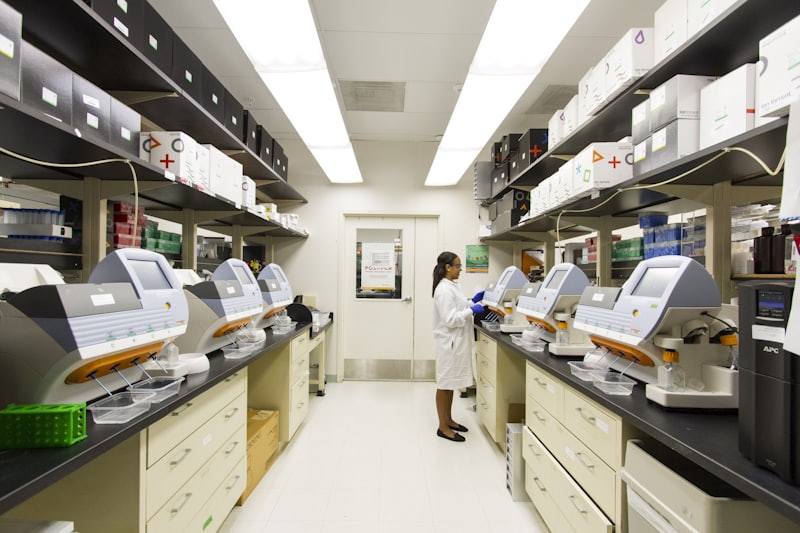
From laboratory receipt of the sample to report delivery, the average time is approximately 15 business days. Sample collection takes less than 2 minutes. Shipping to the laboratory takes 2-4 business days via the prepaid courier included in the kit. Actual times may vary depending on sample processing volume.
What exactly will I find in the report?
The report is organized into five sections: genetic predispositions (27 conditions analyzed with real odds ratios and GWAS sources), CPIC pharmacogenomics (9 genes, 45 active ingredients with Level A dosing recommendations), phenotypic traits (84 documented traits), carrier status (screening for 22 recessive conditions), and an algorithmic Wellness Rating. Each data point includes the specific variant reference (rs-ID), source database, and evidence level.
Can I show the results to my doctor?
The report is designed exactly for this purpose. The pharmacogenomics section in particular uses standard clinical nomenclature (metabolizer phenotype, rs-ID, CPIC evidence level) and is structured to be taken to the doctor's office. Your physician can independently verify any data by consulting the public reference databases: ClinVar, GWAS Catalog, and CPIC.
How is Genomatik different from other genetic tests?
Genomatik focuses on report structure, readability, and verifiability — not on raw data quantity or wow factor. Three concrete differences: (1) we exclusively use public, verifiable databases, not proprietary opaque algorithms; (2) every data point in the report is traceable to its original scientific publication; (3) the report is designed to be useful over time and taken to your doctor, not just read once.
Does the report remain useful over time?
Yes. DNA doesn't change over a lifetime. The genetic variants identified in your report will be the same in 5, 10, or 30 years. As scientific research advances and new associations are discovered, your genetic profile can be reinterpreted in light of new knowledge. A well-structured report is a document that can be consulted over time, not a disposable result.
How is my privacy protected?
The sample travels with a unique code without externally readable identifying data. Genetic data is processed in compliance with EU Regulation 2016/679 (GDPR) and Article 9 regarding special category data. The laboratory operates under ISO 15189 and ISO 9001 certification. Report access is protected by authentication. Data can be deleted upon request.
Does the test replace a medical visit?
No. Genomatik does not provide medical diagnoses. The report is an informational tool that organizes genetic data in a readable, structured format. We do not prescribe therapies, modify dosages, or formulate prognoses. The information is intended to be discussed with a healthcare professional in the context of a clinical relationship.
What is genotyping? Is it different from sequencing?
Yes. Genotyping analyzes specific, pre-selected positions of DNA (SNPs) where individuals are known to differ. Sequencing, on the other hand, reads the entire DNA sequence letter by letter. Microarray genotyping is more efficient and less expensive for analyzing common variants, and is the technology used by most population genomics programs internationally, including ours.
What happens if the sample quality is insufficient?
If the sample call rate does not reach the minimum threshold of 98%, the laboratory automatically performs a second attempt using the preserved saliva portion. If the second attempt also fails, a new kit is sent at no additional cost. The most common cause of below-threshold samples is failure to activate the stabilizing solution at the time of collection.
Which databases do you use?
Three world-reference public databases: ClinVar (NCBI/NIH — over 2.5 million classified variants), GWAS Catalog (EBI/NHGRI — over 1,040,000 SNP-condition associations), and CPIC (PharmGKB — 101 Level A gene-drug pairs). All three are free, public, and independently consultable by anyone.
Is there a dedicated pathway for doctors?
Yes. Genomatik includes a program for healthcare professionals who want to integrate genomic analysis into their clinical practice. The program includes free loaner kits, a dedicated CRM portal for patient management, and direct access to reports. Discover the program for doctors →
How much does it cost?
The Genomatik test costs €199, one-time payment, VAT included. The price includes: saliva collection kit, prepaid round-trip shipping, genotyping of 612,847 markers, clinical database annotation, complete navigable report, and downloadable PDF. No subscription, no recurring costs, no features hidden behind a paywall.