Methodology
Every variant in your DNA is analyzed with a rigorous, transparent, and reproducible protocol. There are no shortcuts: every step is documented, every source is verifiable, every data point is traced back to the original scientific publication.
1. Sample collection
The Genomatik kit contains a CE-IVD certified saliva collection device. The required sample is approximately 2 mL of saliva — less than half a teaspoon — and collection takes less than 2 minutes. No needles, blood draws, or medical visits are required.
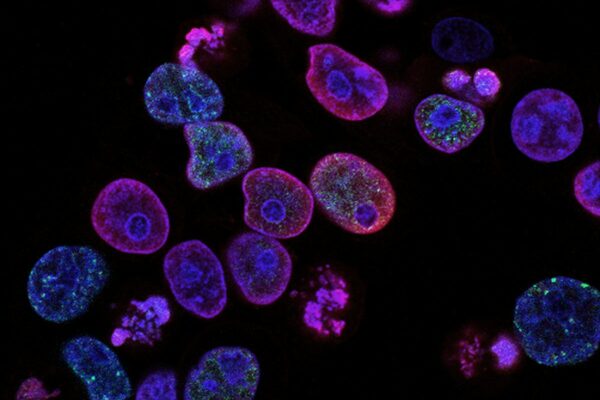
Saliva contains epithelial cells from the oral mucosa, from which genomic DNA is extracted. At the time of collection, a stabilizing solution automatically mixes with the sample, preserving DNA integrity during transport at room temperature. This method is the same used by international reference laboratories for large-scale genotyping.
The kit includes illustrated instructions, a prepaid shipping envelope with tracking, and a unique code that anonymously links the sample to the client profile. The sample travels without any externally readable identifying data.
2. DNA extraction
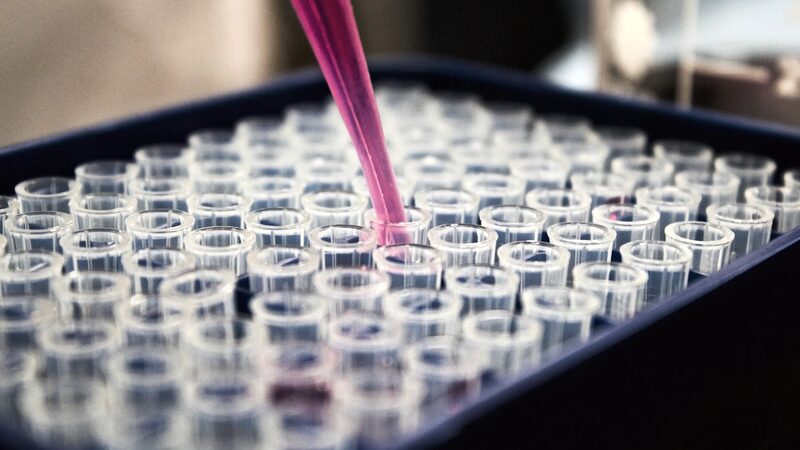
Once received in the laboratory, the sample undergoes automated DNA extraction. The cells present in the saliva are lysed (broken open) to release the nuclear content, and the DNA is isolated and purified through a series of enzymatic washes and column filtrations.
After extraction, DNA concentration is measured to verify it is sufficient for the genotyping phase. If the first extraction does not reach the minimum threshold, the laboratory performs a second attempt using a preserved saliva portion. In case of double failure, a new kit is shipped at no additional cost.
The extracted DNA is then amplified through an enzymatic process that produces sufficient copies for microarray analysis. Amplification is necessary to ensure a robust and readable signal during the genotyping phase.
3. Microarray genotyping
The amplified DNA is fragmented and applied to an Illumina Global Screening Array (GSA v3) chip — the same platform used by clinical genomics programs internationally. The chip is a glass slide on whose surface millions of micro-beads are arranged, each bound to a DNA "probe" corresponding to a specific genetic variant.
When the sample DNA encounters a complementary probe, it binds to it (hybridization). A fluorescent marker identifies which version of the variant is present in the client's DNA. The entire process is performed in batches of approximately 96 samples at a time, with continuous quality monitoring.
Call rate > 99%
The call rate measures the percentage of markers successfully read. Genomatik requires a minimum call rate of 98%: below-threshold samples are automatically reprocessed. The actual average exceeds 99%.
Illumina GSA v3
The Global Screening Array is designed for population genomics, clinical screening, and pharmacogenomics. It includes markers specific to all major ethnicities, not just the European population.
EU certified laboratory
ISO 15189 (medical laboratories), ISO 9001 (quality management), and ISO 17025 (testing laboratories) certifications. Compliance with EU Regulation 2016/679 (GDPR) for genetic data processing.
4. Clinical database annotation
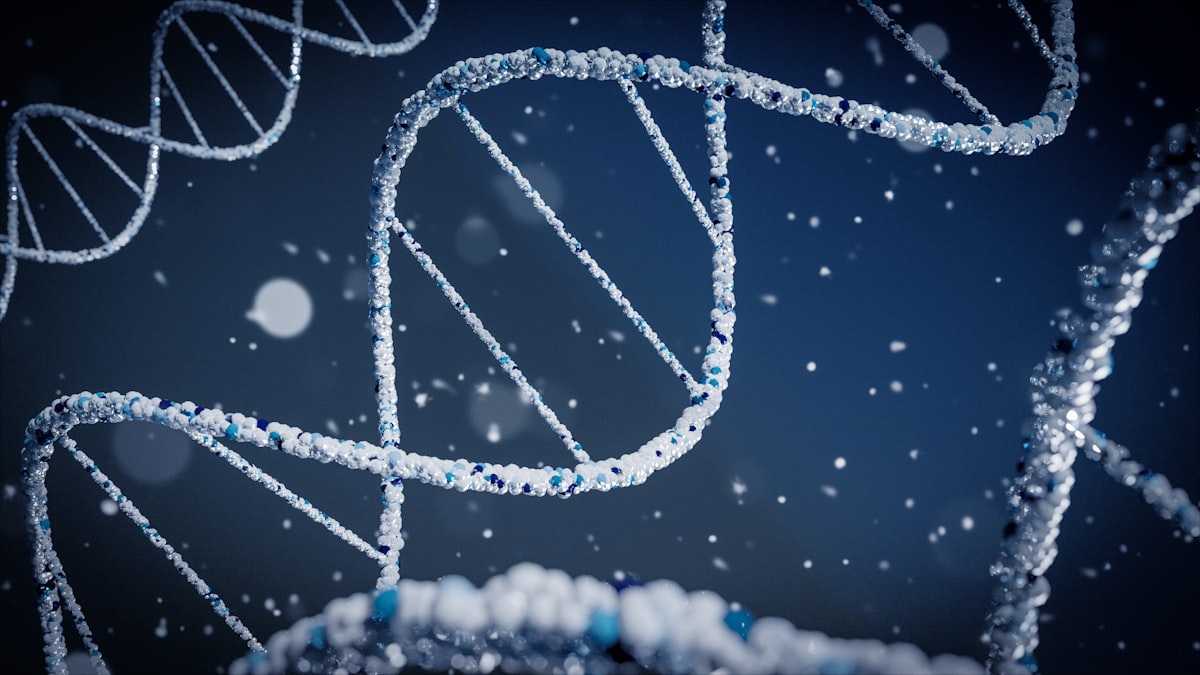
Once the raw genotyping data is obtained, every variant is cross-referenced with three world-reference clinical databases. This is the step that transforms a list of DNA letters into clinically interpretable information.
ClinVar — NCBI / NIH
ClinVar is the public database of the National Center for Biotechnology Information (USA) that collects and classifies genetic variants based on their clinical significance. It contains over 2.5 million variants classified as pathogenic, likely pathogenic, benign, likely benign, or of uncertain significance (VUS). ClinVar provides the predisposition classifications in the Genomatik report.
GWAS Catalog — EBI / NHGRI
The genome-wide association studies catalog is maintained by the European Bioinformatics Institute and the National Human Genome Research Institute. It contains over 1,040,000 associations between genetic variants and clinical conditions, each with odds ratios, confidence intervals, and p-values from peer-reviewed studies. The relative risks in the Genomatik report come from here.
CPIC — PharmGKB
The Clinical Pharmacogenetics Implementation Consortium is the global standard for clinical pharmacogenomics. Its guidelines classify gene-drug pairs by evidence level. Genomatik uses the 101 Level A pairs — those with solid evidence-based dosing recommendations — covering 9 genes and 45 commonly used active ingredients.
All three databases are public, free, and independently consultable. Every data point in the Genomatik report includes the specific variant reference (rs-ID), source database, and evidence level, so the attending physician can independently verify any information.
5. Report generation
The final report is a structured document organized into five distinct sections, each designed to be readable by both the patient and the attending physician:
Genetic predispositions
27 conditions analyzed across cardiovascular, metabolic, neurodegenerative, and oncological areas. Each predisposition includes the odds ratio from scientific literature, confidence interval, and reference to the original GWAS study.
Pharmacogenomics
Metabolizer profile for 9 key genes (CYP2C19, CYP2D6, CYP2C9, VKORC1, SLCO1B1, DPYD, TPMT/NUDT15, HLA-B, CYP3A5) covering 45 active ingredients. Dosing recommendations according to CPIC Level A guidelines.
Phenotypic traits
84 literature-documented traits, from lactose metabolism (LCT) to caffeine sensitivity (CYP1A2), muscle fiber type (ACTN3) to chronobiology, bitter taste (TAS2R38) and many more.
Carrier status
Carrier screening for 22 autosomal recessive conditions: cystic fibrosis, beta-thalassemia, sickle cell anemia, spinal muscular atrophy (SMA), phenylketonuria (PKU), congenital deafness, hemochromatosis and others.
Wellness Rating
Algorithmic score calculated on the ratio between favorable and total variants analyzed. A transparent qualitative assessment that uses no proprietary opaque formulas: the method is declared, the result is verifiable.
The report is available in navigable online format and as a downloadable PDF. Every page includes scientific reference sources and the evidence level associated with each data point.

Every variant is traced back to the original scientific publication
A report designed for the doctor
Every data point in the Genomatik report is accompanied by the scientific source, odds ratio, and evidence level. No statement without a reference. The attending physician can independently verify any information.
6. Quality control
Sample quality
Minimum 98% call rate. Below-threshold samples are automatically reprocessed from the preserved saliva portion. Second failed attempt = free new kit.
Genotypic consistency
Automatic verification of genotype consistency — for example, checking that allelic combinations are biologically possible and that there is no cross-contamination between samples.
Clinical annotation
Verification of database reference accuracy, variant classification, and source completeness. Every variant must be traceable to the original scientific publication.
7. Timelines
From laboratory receipt of the sample to report delivery, the indicated average time is approximately 15 business days. Actual times may vary based on sample processing volume and any necessary reprocessing for below-threshold samples.
The client receives an email notification when the report is ready for consultation.
What we don't do
Genomatik does not provide medical diagnoses. The report is an informational tool that organizes and presents genetic data in a readable, structured format, but does not replace medical advice in any way. We do not prescribe therapies, modify dosages, or formulate prognoses. Pharmacogenomic information is intended to be discussed with a healthcare professional in the context of a clinical relationship.